Uncategorized
Concurso.Emprendedor.Hasta el 6 de Octubre.

Emprendo con Vodafone premia con 8.000€ los mejores proyectos de negocio en tres categorías: Mejor idea de negocio – Mejor idea social – Mejor idea de transformación de negocio.
Además, los ganadores presentarán su proyecto a un importante grupo de inversores y profesionales, para tener la oportunidad de llevarlos a la práctica
Para participar en el Concurso Emprendedor es imprescindible hacer el correspondiente curso gratuito y obtener el Sello Emprendedor que avala la calidad de tu proyecto. Solo así puedes ser seleccionado como uno de los 12 finalistas que presentarán su proyecto a inversores y resultar ganador en uno de los dos premios que se conceden semestralmente en cada categoría.
Los premios se notificarán a sus ganadores .
Consultar las bases legales del concurso.
http://emprendoconvodafone.com/bases-del-concurso-del-plan-de-emprendedores-vodafone/
Video.»Switch to the Nokia Lumia 920 Windows Phone
Nokia con su Windows Phone se ha colocado como tercero en discordia en la batalla entre Apple y Samsung.Debido a los malos resultados de RiM.Un video muy divertido que muestra el panorama móvil.
Sevilla. De visita a WorkIncompany con Jaime Aranda. Si busca un excelente espacio Co-working este es tu sitio.
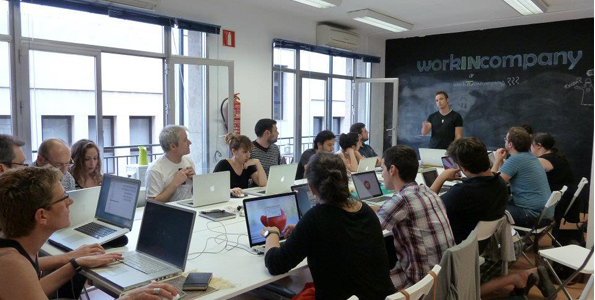
Ayer, estuve en Sevilla, si, en Agosto, a la hora de los toros, a la fresquita, para conocer el espacio WorkIncompany con Jaime Aranda cofundador. A esa hora por las calles hispalenses lo único que había eran turistas, pero me sorprendió la cantidad de gente haciendo co-working en sus instalaciones. El lugar, un sitio acogedor, amplio, con un ambiente fenomenal de trabajo y con un personal, con mucha pansión por lo que hace. Si como emprendedor o empresario tiene necesidad de un sitio Co-Working, que decir que no hay un lugar mejor en Sevilla. Os dejo abajo donde se encuentra y un pequeña presentación. Nos volveremos a ver.
¿QUÉ ES WORKINCOMPANY? Sevilla, C/ Rioja, 13-2-A. Página web http://workincompany.com/
WIC surge como iniciativa de un grupo de profesionales emprendedores que tras un largo proceso de estudio e investigación del fenómeno coworking en otros países, deciden crear en el centro de Sevilla un espacio que sigue los fundamentos principales de esta tendencia laboral en auge.
Estamos creando un espacio coworking en el centro de Sevilla donde los coworkers tendrán a su disposición:
– Mesa de trabajo, silla y espacio de almacenaje individual con llave.
– Sala de reuniones multiusos por horas a su disposición.
– Conexión de banda ancha a Internet.
– Dispositivo de impresión, máquina de café, dispensador de agua, frigorífico y microondas.
– Posibilidad usar el domicilio del centro como domicilio fiscal y utilizar el espacio web de workINcompany como plataforma de promoción propia.
Además de la zona de trabajo y la sala de reuniones, contaremos con un espacio de relación y trabajo distendido donde propiciar la interacción entre los usuarios.
Buscamos dar respuesta a las necesidades de profesionales autónomos, freelances y emprendedores de prácticamente cualquier disciplina, adaptándose a sus necesidades y evolucionando con ellos.
El objetivo es crear una comunidad multidisciplinar de profesionales en torno a un espacio de trabajo dinámico, flexible y abierto a colaboraciones entre los distintos usuarios, generando una red de contactos que favorezca el enriquecimiento personal y laboral de todos los integrantes así como la captación de nuevas oportunidades de trabajo.
La creación y fomento de esta comunidad es otro de los objetivos principales de WIC generando iniciativa que apoyamos con todos los medios posibles actualmente, buscando que las actuaciones de la comunidad tengan repercusión incluso fuera de ella.
Fuente: http://workincompany.com/
Qué fórmulas ofrece España para atraer talento empresarial.
01.08.2013 Arancha Bustillo.
Son pocas, pero existen. En nuestro país hay algunas iniciativas de carácter público y privado para informar y asesorar a los emprendedores que vienen de fuera a poner en marcha aquí sus compañías. ¿Cuáles son los trámites burócraticos? ¿Y las vías de financiación? ¿A qué eventos puedo acudir cuando quiero ampliar mi red de contactos? Estas y otras muchas cuestiones son las que se plantean los emprendedores cuando se enfrentan a su aventura empresarial. Los extranjeros, además, deben encarar otros obstáculos como la cultura del país, el idioma y las formas de sociedades que existen, entre otros aspectos. Aunque escasas, en nuestro país existen iniciativas dirigidas a informar al talento foráneo de las oportunidades de negocio y las maneras para establecer una empresa en España: Iniciativas públicas. Invest in Spain es un programa que pertenece al Icex y que se encarga de promover y atraer inversión extranjera. Miguel Ángel Trujillo, socio director de BA International Partners, recuerda que este portal recoge información pertinente para los extranjeros que quieran implantar sus empresas en el país: impuestos, mercado de trabajo, incentivos, vida en España, etcétera. De carácter más local son Madrid Emprende y Barcelona Activa que también disponen de información para quienes quieran crear una empresa en esas ciudades, las facilidades fiscales, los trámites burocráticos y administrativos, los eventos, etcétera. Son, en resumen, programas de acompañamiento. Así lo entiende Juan Roure, profesor de Iniciativa Emprendedora de IESE Business School, quien además asegura que las medidas que ofrecen estas plataformas no aportan instrumentos financieros, por lo que estos emprendedores deben acudir a los mismos cauces que los nuevos empresarios nacionales. Estos son: redes de business angels, ayudas de carácter estatal como Enisa o préstamos ICO, o al capital riesgo. Para emprender en un país extranjero es fundamental tener contactos y conocer el idioma y la cultura La vía formativa. Otra fórmula a la que pueden acogerse quienes elijan nuestro país como el destino para sus empresas son las escuelas de negocios. Rodolfo Carpintier, presidente de DaD, recuerda que en estas instituciones más del 70% de sus alumnos son extranjeros y muchos de ellos optan por la creación de sus propias compañías. Estos organismos no sólo ofrecen la información teórica, también una red de contactos muy extensa que estos alumnos pueden aprovechar para encontrar financiación y asesoramiento. Roure también señala a las redes de ex alumnos de escuelas internacionales y universidades. “De esta manera se creó eDreams. Javier Pérez-Tenessa usó el network de la Universidad de Stanford, cuando estaba terminando su máster en esta institución, para informarse de la mejor manera para poner en marcha su proyecto”, asegura el profesor del IESE. Aunque todos los expertos consultados coinciden en que cualquier proyecto con potencial puede impulsarse en España, también creen que aún hacen falta más iniciativas para atraer talento. El ejemplo de Chile Chile cuenta con un programa para atraer talento empresarial extranjero. A través de Start Up Chile, los foráneos interesados en abrir una compañía en este país disponen de 50.000 euros de capital y una visa de trabajo por un año para desarrollar sus proyectos durante seis meses. En ese tiempo, se les pone en contacto con redes de capital y otros nuevos empresarios para facilitar el ‘networking’. Con esta iniciativa pretenden ser el ‘Silicon Valley’ latinoamericano. Visado Los inversores y emprendedores echan en falta un visado que atraiga el talento y fomente la creación de empresas por parte de extranjeros. Daniela Arens y Christopher Pommerening, creadores de Foundum. Ecosistema emprendedor Christopher Pommerening conoce de primera mano las dificultades que un emprendedor se encuentra en el camino cuando se enfrenta a la aventura de poner en marcha su empresa. Más, si cabe, si éste emprende en un país que no es el suyo. Pommerening llegó a España hace 15 años, cuando todavía era un joven estudiante de management internacional y administración y dirección de empresas, y creó Autoscout24, un clasificados de coches. Su trayectoria no termina ahí. La sed emprendedora le llevó a poner en marcha otra compañía que fracasó y hoy es socio fundador de la primera empresa internacional de Capital Riesgo basado en España: Active Venture Partners. Sus éxitos y, sobre todo, sus fracasos le han enseñado a moverse con destreza por el ecosistema emprendedor español. Sin embargo, admite que apenas hay iniciativas que ofrezcan la información que un nuevo empresario reclama para sacar adelante un proyecto en otro país. Por eso ha creado Foundum junto a su mujer, Daniela Arens, también emprendedora (es cofundadora de Linquia, un punto de encuentro entre redes sociales y marcas). Arens resume su proyecto como un lugar en el que “facilitar a la siguiente generación de emprendedores los medios para su crecimiento y su éxito. Queremos incrementar su impacto positivo en el mundo durante las diferentes etapas en la creación de empresas”. Esa es la misión de Foundum: crear un ecosistema emprendedor local, nacional y global que conecte a nuevos empresarios de alto potencial de crecimiento y sus start up con inversores privados, asesores, proveedores de servicios y financieros para estimular la puesta en marcha de sus compañías. Una compañía ‘made in Spain’ con tecnología Alemana Timo Buetefisch llegó a España en 2002 para cursar un MBA en IESE y se quedó para hacer realidad su aventura empresarial: Cooltra, una empresa de alquiler y renting de motocicletas. Timo Buetefisch, fundador de Cooltra. Este alemán, natural de Hannover, siempre quiso emprender. En 2003 puso en marcha una empresa que no funcionó y tres años más tarde, con más experiencia y contactos, logró hacer funcionar la compañía con la que en 2012 facturó 3,5 millones. Cuenta que poner en marcha una empresa en España no es más difícil que en cualquier otro país, pero admite que se necesita mucho esfuerzo y ganas para no darse por vencido. Buetefisch arrancó con una inversión inicial de 60.000 euros que puso de sus propio bolsillo y en estos años ha conseguido realizar cinco rondas de financiación. Asegura que ha presentado su proyecto a decenas de entidades financieras hasta dar con la que le otorgó un préstamo ICO que ya ha devuelto, y ha tenido que llamar a muchas puertas para lograr inversores privados. Admite, sin embargo, que conocer el idioma y la cultura del país soluciona muchos problemas y, en su caso, haber cursado un MBA en una escuela de negocios de prestigio también le ha abierto muchas puertas y le ha proporcionado una red de contactos importante. Aún así, Buetefisch reconoce que han sido años difíciles. “En 2006 compramos 50 motos y en 2007 me presenté a los primeros inversores. Hemos vivido en una montaña rusa y hemos tardado más de un lustro en llegar al punto de equilibrio”. Aunque cree que las condiciones para la financiación podrían ser más sencillas, el fundador de Cooltra ha conseguido llevar a cabo cinco rondas de financiación con las que ha levantado tres millones de euros. Además, ya están en Italia, Francia y Grecia
Qué fórmulas ofrece España para atraer talento empresarial,
Fuente: Emprendedores&Empleo, expansion.com
TED: Ludwick Marishane: Un baño sin agua
Si tuviera que caminar casi dos kilómetros por un jarro de agua todos los días, como hacen millones de personas, es poco probable que usara esa agua preciosa para bañarse. El joven empresario Ludwick Marishane cuenta la historia increíble y divertida de cómo se inventó una solución económica, limpia y cómoda: DryBath, la primera loción para ducharse sin agua.
Estudiante Ludwick Marishane inventó un mínimo de agua loción de baño y fue nombrado el 2011 Global Student Empresario del Año -. Todo porque no tenía ganas de tomar un baño.
Pagina Web Sintetia.The Entrepreneurship Journey ¿Una carrera de obstáculos?
Juan Sobejano.
Mis amigos de Uno500 han producido recientemente un interesantísimo documental, The Entrepreneurship Journey, de obligada visualización a los que nos interesa esto de emprender en España. Mi socia Giselle Della Mea y yo tuvimos la suerte de participar en el reportaje dando nuestra opinión sobre el tema.
Como lo interesante es ver el video sólo voy a comentar algunas ideas que he ido apuntando, de manera algo caótica, al visualizarlo.
Una de las primeras cosas que llaman la atención es ya una de las primeras frases de Imran Jina, el conductor del documental: España está por detrás de Yemen y Sudan en la facilidad para crear empresas. Al hilo de esto me parece espectacularmente desalentadora la frase de Iñaki Ortega, Director de Madrid Emprende, cuando dice que “hay muchos obstáculos en España, por supuesto, ¡somos Europa! ¡Hay mucha burocracia!”. ¿De verdad esa es una razón? ¿Esa es la explicación y la justificación a lo que tenemos que aguantar los emprendedores? Luego el propio Ortega y los demás miembros de las administraciones que participan reconocen la necesidad de simplificar esos trámites y de abaratar los costes que los emprendedores soportan.
La verdad es que si nos quedáramos ahí tendríamos un panorama verdaderamente sorprendente. Por un lado tenemos un gobierno y unas administraciones que fomentan el emprendedurismo, pero por otro no hacen más que poner trabas legales y económicas a esas iniciativas. Ya digo yo en el video que esto está generando una burbuja que tarde o temprano estallará.
Menos mal que se ven iniciativas y modelos de gestión realmente interesantes. Por un lado está Hub Madrid, explicado magníficamente por su director Max Oliva. El poder de las redes se está volviendo fundamental. La capacidad que tienen las personas de conectarse, colaborar (fundamental el libro de Yochai Benkler) y crear esas redes ha de ser un factor de apoyo para el éxito de los proyectos. Llámalo economía crowd, sharing economy o como sea, al final de lo que se trata es de compartir riesgos y potenciar nuestra capacidad de generar ideas y oportunidades.
Igualmente brillante me parece la participación de los representantes de la Cooperativa Mondragón. Mikel Lezamiz dice algunas frases memorables y que dice mucho del éxito de la cooperativa. Me quedo con la importancia que dan al saber, al conocimiento, hasta el punto de decir que “la Cooperativa Mondragón es un proyecto educativo que utiliza la economía como recurso”. ¡Brillante!
No es extraño que José María Luzárraga, Team Coach del Grado Leinn de la Universidad de Mondragón, siga con el mismo discurso. Conecta su discurso también con lo que decía antes de la importancia de la colaboración. Así el modelo Leinn (recomiendo a los que estén formándose en emprendedurismo y gestión de empresas que lo tengan como una opción muy a tener en cuenta) tiene entre sus lemas “ordinary people doing extraordinary things in teams”. Otro par de ideas fundamentales de Luzárraga y que conectan con el modelo de gestión Lean: La clase es el mundo, hay que salir de la oficina para aprender (learning by doing), y la empresa una herramienta para aprender.
Esto me lleva a otra idea que se repite varias veces en el documental: el miedo al error, al fracaso o a equivocarse. Lo dice Luisa Alemany, Directora del Instituto de Iniciativa Emprendedora de ESADE, y algunos emprendedores. Creo que es fundamental que seamos capaces de comprender que el error forma parte del aprendizaje y de la emprendeduría. “Fracasar para emprender”, se dice en el documental.
Nicola Cerantola dice algo que me parece muy interesante: hay personas que tienen talento para ser ejecutores y otras para ser iniciadores de proyectos, el problema es que estamos corriendo el peligro de meter a todos en el mismo saco y empezando a estigmatizar a los no-emprendedores, identificando a estos como los que desarrollan proyectos empresariales. Lo dice Luisa Alemany, un emprendedor no es necesariamente el que monta una empresa, pero tiene razón Cerantola al comentar esa incipiente tendencia a idealizar a los emprendedores, cosa a la que como digo yo el gobierno está ayudando mucho.
Ana Belén García comenta al principio algo que me paree fundamental. Ella habla de que uno de sus miedos es el perder el control del proyecto, el tener la sensación de que haya procesos que no controla. Creo que es un error en el que caen muchos emprendedores. En mis clases a emprendedores siempre les digo que sus ideas no valen nada, que lo que de verdad tiene relevancia es la forma en la que sean capaz de gestionarlas, y para eso es posible que requieran de ceder parte del control para mejorar su acceso a mercados.
Al final Giselle y yo lanzamos algunas ideas que brevemente comento. Por un lado la necesidad de trabajar más el intangible, pero de manera racional, no como producto (miles de cursos, iniciativas formativas y masters peleando por acceder al mercado), sino como factor clave de la innovación y el emprendedurismo.
Hay que trabajar más proyectos que creen producto y menos aquellos que buscan la intermediación. Veo y trabajo con muchos emprendedores. En un altísimo porcentaje los proyectos, sobre todo si son de base tecnológica son herramientas de intermediación. Hay muy poco producto final. Medio en broma medio en serio siempre digo que al final no vamos a tener producto que intermediar pero sí muchos canales y herramientas para llevar al mercado la nada.
Es importante tener en cuenta que las ideas no valen nada por sí mismas, como he dicho, que lo que de verdad vale es la utilidad que le damos y cómo las gestionamos. Ahí está la clave.
Para terminar Imran Jina habla de tres claves para mejorar el emprendedurismo en España: educación (adecuada, racional y enfocada a objetivos), coordinación del apoyo al emprendedor (con unas administraciones que trabajen de manera conjunta) y mejora del acceso a la financiación (fundamental para que los proyectos pasen de la fase semilla).
Como digo, un video interesantísimo que merece mucho la pena ver y del que sacar muchas e interesantes ideas.
Fuente: Juan Sobejano
http://www.sintetia.com/the-entrepreneurship-journey-una-carrera-de-obstaculos/
Business Booster. Una Startup Factory.
Bienvenido a Business Booster. Una Venture Capital y aceleradora de Startup. Ubicada en Valencia. Convoca la 6ª edición de su programa de aceleración de Startup. Página web: http://www.bbooster.org/
Startup Weekend Baghdad. Another voice: Entrepreneurship in Baghdad.
Startup Weekend Jul 30, 2013
By Sheikh Shuvo, Regional Manager at UP Global.
Meet Maryam. She’s a 24-year-old Iraqi woman, a college graduate with an IT degree, and has been actively searching for employment for almost two years. Right now, she’s presenting Cartoon, a digital animation business idea that she’s spent the past 54 hours crafting and building. There are more than 200 people in the audience, each watching her every move, analyzing each statistic she shares, and dissecting her market research. This is her first time speaking in front of an audience this big. You can see a hint of sweat on her brow, peeking through her lavender colored headscarf. She softly giggles, and moves onto her demo.
She doesn’t know it yet, but in two hours, her team will be announced as the winner of the first Startup Weekend in Baghdad.
Another fact that she isn’t aware of is that while she is pitching her idea, a novel idea to use cartoon videos to address sensitive social issues, six people were killed when a bomb exploded in a market a few kilometers away from the event venue. Over the past month, over 400 people have been killed in similar instances.
Challenging Stereotypes
It’s impossible to enter a place without stereotypes, and few places have as much baggage as Baghdad. On my first trip to Iraq in January 2013, this is something the border security at King Sheikh Hussein Bridge Border Crossing in Jordan would not let me forget.
«Why do you want to go to Iraq? Don’t you know…boom, boom, boom!» chuckled the guard as he pointed his fingers at me imitating a semi-automatic rifle. I wish the guard could have been at Startup Weekend Baghdad.
He would have seen 124 people – all strangers to each other – come together on Thursday evening, some traveling more than 3 hours, each navigating dozens of security check points that hunt for car bombs, verify identities, and turn traffic into chilled molasses.
He would have heard 44 people pitch ideas for new businesses that could potentially generate revenue and create jobs in Baghdad.
He would have felt the electric energy of 11 teams working tirelessly over the course of three days, several stumbling along on only a handful of hours of sleep.
More importantly, he would have had the chance to have tea with 17-year-old Mustafa Ahmed Abdulabeer, a soft-spoken high school student with a bushy mustache and a six-inch coif of hair that beats Elvis. If Mustafa lived in the Bay Area, he would likely get paid more than you for his software wizardry. Along with a team of four, he spent the weekend building a mobile application to help consumers choose the best Internet provider, based on speed, cost, and availability. His creation of a functional application landed his team a prize for «Best Technical Execution.»
Or, the border guard could have dined with Katral-Nada Hassan, a native Iraqi who is a managing partner at In2Consulting. She flew from Dubai – urged by a sense of patriotism and desire to give back – to mentor all of the attendees on the principles of user experience design for digital products. Given the polish of many of the ideas, her time paid off well.
One local blogger observed a shift in the mentalities of the attendees throughout the event, describing a transformation in all the attendees as «they start living in each other worlds sharing their own fantasies dropping behind the infamous Iraqi egotistic, arrogant and pompous spirit, they just simply translocated from Baghdad to another planet, from shattered dreams to the land of dream’s merit.»
The effects of war and sectarian violence are a wound to a city, but wounds do heal. Indeed, a deep respect and appreciation for the history and culture of Baghdad was a common theme that weaved its way into conversations and business strategies.
«I’m not proud of what my people have done since Saddam left. I’m not proud that six of my uncles died during the war. I’m not proud that I come home angry after four hours spent in traffic,» said Sarmand, a 31-year-old project manager at Mercy Corps, «but I am proud of the two rivers of Iraq. I’m proud that Iraq created the world’s first constitution. I’m proud that Iraq created algebra.»
Some of the other popular ideas at the event included Baghdad Life, an online portal that informs locals of upcoming events and festivals and serves as a guide for tourists to showcase Baghdadi culture. The team of Bil Weekend embraced the history of Baghdad, as well, building a service to identify, report, and publicize points of archaeological interest throughout Iraq.
Hopefully, Iraqi entrepreneurship is something Sarmand can be proud of, too.
Breaking Down Barriers
Of course, real barriers exist in Baghdad that few other entrepreneurs around the world face. Yet, this event was a simple, but powerful validation of both the depth of talent within Baghdad and the huge, untapped demand from the community for opportunities to unleash creative energies. To keep this fire blazing and transform the World’s narrow and incomplete image of Baghdad, Startup Weekend events can be a beginning, but more is needed.
Firstly, more money needs to be invested in concepts like Fikra Space, a hackerspace in downtown Baghdad that hosts workshops, build nights, and creates a space for like-minded individuals to come together and share ideas.
Secondly, more energy needs to be spent highlighting local success stories like Mohammad Al-Samurai, a mentor at Startup Weekend Baghdad and the co-founder of EasyBites, a mobile application to facilitate restaurant food delivery. While a seemingly basic concept, delivery is made a challenge by the lack and unreliability of addresses in Iraq. Instead of relying on addresses, Mohammad and his team created a crowdsourced bank of landmarks and geotags, which once overlaid on a map, restaurants were able to pinpoint exact delivery spots. Currently, EasyBites is in talks to franchise their software to companies in three other countries that face similar mapping problems.
Lastly, more time needs to be spent painting entrepreneurship as an alternate career choice. Deeply talented, high potential individuals like Maryam shouldn’t need to spend month and years looking for employment. She should be empowered at every point to create her own opportunities.
In fact, after her team’s glowing performance during the weekend, she is currently in talks with USAID to work on developing an initial pilot for her series of animated cartoons.
This is a lesson to not just read between the lines of violence and danger in Baghdad, but rather to look beyond them and smile together with Maryam.
Fuente:The Huffington Post
http://www.huffingtonpost.com/startup-weekend/another-voice-entrepreneu_b_3677765.html
Startup Weekend Galicia 2013 Recap by Startup Weekend Crew
This post is by Jose Iglesias, Regional Manager at Startup Weekend Europe. Before joining the Startup Weekend core team, Jose previously organized Startup Weekend Galicia. Jose then went full-circle and facilitated the fourth iteration of the event July 12, and his thoughts on the weekend are below.
It has been exactly one week since the fourth edition of Startup Weekend Galicia, in the Vigo headquarters of Elogia for the second time. Challenges abound! Seven projects were created over the course of the weekend:
War of Sides: A game in which you conquer cities in real time, armed only with your mobile phone
ReceTic: Diet recommender based on statistical analysis with gamification elements
BeEasy: Multilateral platform that facilitates improved communication and interaction between brands, consumers, and bars
Miradi: A website for finding and sharing ideas; you can post project proposals, gain visibility, and find a team
Deskally: Do you have a business with excess space? Deskally is the Airbnb for businesses.
Here I Am: Application with which you can track your kids using GPS.
Making Smart: Identifies opportunities for professionals based on the intelligent interpretation of LinkedIn data; Siri for professionals.
Yes – you read that right – all of these projects were created over the course of a single weekend. Friday, Saturday, and Sunday. Without a break. In July. And the attendees paid to do it! And first-class mentors such as Miguel Silva, Javi López, Carlos Otero, Manuel Montes, Jaime Novoa, José Alcaniz, Miguel Lorenzo, Lalo García, Pablo Conde, Rubén Bastón, Víctor Salgado, Xoán González, Juan Guell, Luís Sestelo, Susana Gómex, Ismael Faro and Jacobo García-Durán volunteered countless hours of their time to help the teams succeed.
The crazy people from Elogia gave us all weekend to run free in their offices again. The support and sponsorship of the Fundación Novacaixagalicia, AJE, Quobis, Pintos & Salgado, Coca-Cola, Cambalache, Vindeira Capital, Duplo, EYEDO, Indenext, Streaming Galicia and Verde made it all happen.
And because we are doing this backwards, here is what we should have started with: what is Startup Weekend?
We could say that it is the premier community for entrepreneurs in the world, that we are in more than 130 countries, that more than 120 thousand people around the world have attended our events, that hundreds of successful ventures have launched at a Startup Weekend…but one person described all of this in the best way possible after attending Startup Weekend Cebu in the Phillippines. This person wrote a post on his blog intending to alert the world about the nefarious agenda lurking in the shadows of Startup Weekend. “Beware of Startup Weekend, it is a conspiracy,” the title warned, and I, first as a volunteer organizer and for the past few months as part of the 30-person core team, couldn’t agree more.
We are a conspiracy, an oasis in the middle of a desert full of conformism, of negativity, of obedience. A place in which the word crisis does not exist, in which people do no remember everyday problems. An illusion. A 54-hour period of time in which you are free, capable of anything, in which the need for sleep and resulting fatigue are completely eclipsed by your drive. A reunion for crazy people.
What is our goal? We want that 54-hour hiatus to never end, and for the desert to become the real illusion.
http://europe.startupweekend.org/2013/07/31/startup-weekend-galicia-2013-recap/
If I Can Be An Entrepreneur, So Can You. V. Wadhwa
VIVEK WADHWA: I was 33 years old when I became an entrepreneur. I had developed a revolutionary technology at First Boston, a New York-based investment bank, and IBM offered to invest $20 million in it—provided that we spun the technology off into a new company. I was asked to take the job of chief technology officer.
I didn’t come from an entrepreneurial family, and I had no entrepreneurial aspirations. I had a wife and two children to support. Taking this position would entail relinquishing a great job that paid a hefty six-figure salary, for a startup that could easily go out of business—and didn’t pay as well. So it wasn’t an easy decision. Nonetheless, I took the plunge.
We grew the startup, called Seer Technologies, to 1000 employees and $120 million in annual revenue in a short five years. Then we took it public. The IPO was fun, but the experience afterwards was like a nasty hangover. The excitement was gone. I got sick of the big-company politics and the obsession with meeting short-term revenue goals. I wanted out.
Microsoft tried recruiting me and told me they would have offered stock that was worth a fortune, but I could not stomach the thought of working for another big company. So I chose to start my own company again. I was 40.
I realized that, after tasting entrepreneurship, I had become unfit for the corporate world. There was no turning back. The only regret I had was having wasted my life in the corporate world for so long.
Some people say that my transformation was a fluke—that entrepreneurs are born, not made. They also say that successful entrepreneurs are young. I have had heated debates with venture capitalists who claim that they know an entrepreneur when they see one. They say it’s the kids who sell lemonade or start dog-walking businesses while in primary school. And some VCs pride themselves on their abilities of “pattern recognition.” I doubt I would have fit the pattern.
The majority of successful entrepreneurs don’t fit the pattern either.
How do I know? Because I’ve worked with leading academics to research this.
After my health suffered due to the stress of running my second company, I had to switch careers. But I still didn’t want to go back to the corporate world. So I became an academic. And the topic of what makes an entrepreneur is one of the first subjects I researched.
My team surveyed 549 successful entrepreneurs. We found that, like me, the majority didn’t have entrepreneurial parents or any entrepreneurial aspirations while going to school. They started companies because they had become tired of working for others, had a great idea they wanted to commercialize, or woke up one day with an urgent desire to build wealth before they retired.
We found that 52% of entrepreneurs surveyed were the first in their immediate families to start a business— just like Bill Gates, Jeff Bezos, Larry Page, Sergei Brin, and Russell Simons (Def Jam founder). Their parents were academics, lawyers, factory workers, priests, bureaucrats, etc. About 39% had an entrepreneurial father, and 7% had an entrepreneurial mother. Some had both.
Only a quarter caught the entrepreneurial bug when in college. Half didn’t even think about entrepreneurship until then. There was no significant difference between the success factors or hurdles faced by entrepreneurs who were extremely interested in entrepreneurship in school (and who likely set up the lemonade stands) and the ones who lacked interest. But entrepreneurs with extreme interest started more companies and did it sooner. Of the 24.5% who indicated that they had been “extremely interested” in becoming entrepreneurs during college, 47.1% had gone on to start more than two companies (as compared with 32.9% of the overall sample). Sixty-nine percent started their companies within 10 years of working for someone else (as compared with 46.8% of the rest of the sample population).
Family entrepreneurship, prior interest, and extreme interest had little bearing, then, on the successes. So what did bear on them? Education did—but not which college they graduated from. In a different study of the 652 CEOs and CTOs of 502 tech companies, we researched the correlation of education with the sales and headcount of companies founded. We learned that companies started by founders with just high-school diplomas differed significantly from the rest. Education provided a huge advantage. But there wasn’t a big difference between firms founded by Ivy-league graduates and those founded by graduates of other universities.
We also found that, in the tech world, older entrepreneurs are the norm—not the exception. Our research showed that the average founder of a high-growth company launched his venture at age 40. We also found that these founders were likely to be married and to have, on average, two or more kids. They typically had six to ten years of work experience and real-world ideas. They simply got tired of working for others and wanted to rise above their middle-class heritage.
So if anyone tells you that you’re too old to be an entrepreneur or that you have the wrong background, don’t listen to them. Go with your gut instincts and pursue your passions. Like me, you’ll wonder why you wasted your time working for that jerk boss
Fuente: WSJ
http://m.us.wsj.com/articles/BL-232B-1371
 Javier Sanxchez Abogados Consultores